
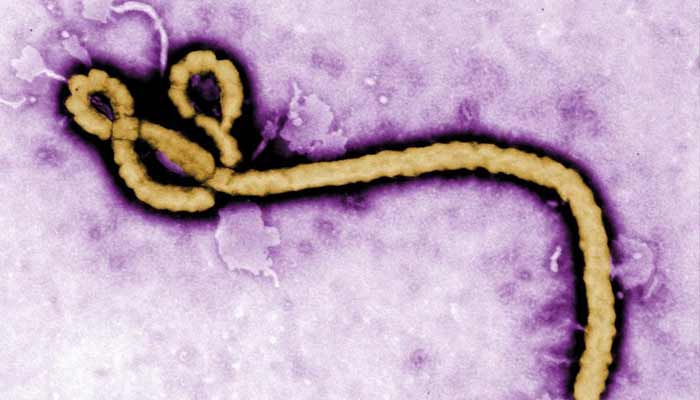
An Ebola outbreak in the Democratic Republic of Congo that has caused at least 80 deaths has a “very high lethality rate” and no vaccine or specific treatment, the country’s health minister warned on Saturday.
Nearly 250 suspected cases of the highly contagious haemorrhagic fever have been recorded in DR Congo, according to the health ministry, with one death reported in neighbouring Uganda.
Medical aid group Doctors Without Borders (MSF) said it was preparing a “large-scale response”, calling the rapid spread of the outbreak “extremely concerning”.
“The Bundibugyo strain has no vaccine, no specific treatment,” DR Congo’s Health Minister Samuel-Roger Kamba said Saturday.
“This strain has a very high lethality rate which can reach 50%.”
Earlier Saturday, ministry officials said the death toll had reached 80, up from 65 the previous day.
The strain has also claimed one life in neighbouring Uganda, officials said Saturday, that of a Congolese national.
That correlated with an announcement late on Friday by Uganda’s health ministry, which said a 59-year-old man from the DRC had died in Kampala after being admitted earlier in the week. His body was repatriated the same day.
Tests showed the victim in Uganda was infected with the Bundibugyo strain of Ebola, first identified in 2007.
Vaccines are only available for the Zaire strain, which was identified in 1976 and has a higher fatality rate of 60-90%.
Health officials had confirmed the latest outbreak on Friday in Ituri province in northeastern DR Congo, bordering Uganda and South Sudan, according to the Africa Centres for Disease Control and Prevention (CDC Africa).
Adding to concerns of spread are significant cross-border population movements in the region affected.
According to Kamba, patient zero was a nurse who reported to a health facility in provincial capital Bunia on April 24, with symptoms suggesting Ebola.
Symptoms of the disease include fever, haemorrhaging and vomiting.
MSF said it was mobilising medical, logistical and support staff to help respond to the outbreak.
“The number of cases and deaths we are seeing in such a short timeframe, combined with the spread across several health zones and now across the border, is extremely concerning,” says Trish Newport, MSF Emergency Programme Manager.
High risk of spread
It is the 17th Ebola outbreak to hit DR Congo, and officials warned of a high risk of spread.
The country’s health ministry said overnight the number of fatalities had risen to “246 suspected cases notified and 80 deaths”.
“It is a large outbreak,” said Jay Bhattacharya, acting director of the US Centers for Disease Control and Prevention (CDC) on Friday.
The previous outbreak of Ebola, which has killed some 15,000 people in Africa over the past 50 years, despite advances in vaccines and treatment, was last August in the central region.
That episode killed at least 34 people, before being declared eradicated in December.
Nearly 2,300 people died in the deadliest outbreak in the DRC between 2018 and 2020.
Ebola, believed to have originated in bats, is a deadly viral disease spread through direct contact with bodily fluids. It can cause severe bleeding and organ failure.
According to the World Health Organisation (WHO), outbreaks over the past half century have seen a mortality rate among those affected of between 25% and 90%.
The virus spreads from person to person through bodily fluids or exposure to the blood of an infected persons, who become contagious only once they display symptoms. The incubation period can last up to 21 days.
“Given the uncertainties and severity of the illness, there is concern about the scale of transmission in affected communities,” the WHO said Friday as it prepared to airlift five tonnes of material including infection prevention gear from Kinshasa.
Large-scale transport of medical equipment is a challenge in DR Congo, a country of more than 100 million people which is four times the size of France but has poor communications infrastructure.