

The war looks to be moving into a phase where control of strategic chokepoints and economic infrastructure may prove more decisive than traditional battlefield outcome.
On the 12th day of the US-Israel war against Iran, the maritime domain, particularly the Strait of Hormuz, clearly emerged as the main flashpoint, shaping both the military trajectory of the war and the strategic calculations of the US as the contest over oil flows and shipping lanes began to define the central logic of the conflict.
In the past 24 hours, at least three separate attacks were recorded against commercial vessels operating in or near the Strait of Hormuz, reinforcing the perception that Iran is now enforcing its threat to disrupt maritime traffic through direct kinetic pressure. The incidents occurred in quick succession and involved vessels from three different flag states, which pointed to the widening risks to global shipping.
A Thailand-flagged bulk carrier, Mayuree Naree, was struck by an unidentified projectile roughly 11 nautical miles north of Oman inside the strait, triggering a fire that forced most of the crew to evacuate before the blaze was eventually contained. Shortly afterwards, a Japan-flagged container vessel, One Majesty, suffered damage from a similar strike about 25 nautical miles northwest of Ras al-Khaimah in the United Arab Emirates. Another bulk carrier, Star Gwyneth, sailing under a Marshall Islands flag, was hit roughly fifty nautical miles northwest of Dubai. None of the incidents resulted in major damage, but the pattern of attacks was enough to reinforce worries among shipping companies that the waterway had effectively become an active conflict zone.
These incidents occurred despite earlier American strikes targeting Iranian mine-laying vessels in the Gulf. Intelligence assessments indicate that Iranian preparations to deploy naval mines have nevertheless continued. Analysts believe that even limited attacks, carried out intermittently through drones or missiles, could be sufficient to freeze commercial insurance coverage and deter normal shipping without requiring a full-scale closure of the Strait.
The result has been a near collapse in conventional traffic through one of the world’s most critical energy corridors. Estimates suggest that non-Iranian or non-Chinese-linked shipping transits through the Strait of Hormuz have fallen sharply compared with pre-conflict levels. Iranian oil exports to China through shadow fleet arrangements continue, however, and more than 11 million barrels have reportedly moved through alternative channels since the war began.
For Washington, the maritime crisis has introduced a new and increasingly dominant priority, elevating the continued flow of oil through the Gulf as the central strategic objective guiding American policy in the war. The rising pressure on energy markets has already begun to produce visible domestic consequences inside the US, where gasoline prices have gone north, fueling political criticism of the war. Moreover, the perception that economic costs are outweighing military gains is deepening.
The pressure on energy markets has been amplified by a cascade of disruptions across the region’s petrochemical sector. More than a dozen facilities have declared force majeure conditions, while insurance rates for tankers operating near the Strait of Hormuz have surged sharply. Global markets are increasingly factoring in the possibility that the maritime confrontation could persist for months, if not longer, particularly if Iran chooses to sustain harassment operations rather than impose a total blockade.
This emerging pattern fits closely with Tehran’s broader strategy of asymmetric attrition. Although coalition air strikes have inflicted measurable damage on Iranian military infrastructure, including airbases and missile facilities, Iran’s capacity to apply pressure through drones, proxy forces, and maritime disruption has largely remained intact. Iranian officials have repeatedly signaled that the security of regional shipping will depend on the broader political environment.
The possibility that the maritime theater could expand further remains a central concern among regional planners. The possible entry of Yemen’s Ansarullah movement into the conflict at some later stage would bring the Bab al-Mandab chokepoint into play alongside the Strait of Hormuz. If this were to happen, a third of global oil shipments could be disrupted, delivering a major shock to global trade far beyond the Middle East.
While the maritime contest increasingly dominates strategic calculations, military exchanges on land and in the air have continued at a lower but still significant intensity. American forces released footage showing the destruction of an Iranian ballistic missile launcher hidden inside a hardened shelter, with the resulting explosion indicating the presence of stored ammunition. Additional strikes reportedly targeted hardened aircraft shelters at an Iranian airbase near Isfahan, where several aging fighter aircraft were believed to be stationed.
Iranian responses during the same period relied heavily on drones and intermittent missile attacks targeting Israeli cities. Air raid sirens sounded repeatedly in Tel Aviv during the previous night, while Iranian media outlets claimed attacks on intelligence and radar facilities connected with Israel’s air defense network. This pattern of attacks suggests that the conflict is settling into a cycle of repeated harassment strikes rather than decisive engagements.
Beyond the central battlefield, the proxy network aligned with Tehran continues to apply pressure across several fronts. Hezbollah has maintained a steady barrage of rockets and anti-tank fire along the northern border with Israel, while Israeli air strikes inside Lebanon have inflicted additional casualties in the Baalbek region, where local authorities reported that several civilians, including children, were killed in recent raids. The Lebanese death toll since the expansion of the conflict has now climbed into the hundreds.
In Iraq, armed factions aligned with Iran have continued drone attacks against facilities linked to American logistics networks, including reported strikes near Basra and other installations associated with coalition operations. In one such attack, a resistance group claimed 13 US soldiers were killed, but the claim could not be independently verified. Nevertheless, attacks in Iraq have continued to stretch the defensive posture of American forces across multiple theaters.
At the same time, Tehran has signaled that the conflict could extend into additional domains beyond energy infrastructure. Iranian state media outlets have publicly named several Western technology companies operating in the Gulf and Israel as potential targets, arguing that digital infrastructure linked to military and intelligence operations forms part of the broader battlefield. Iranian drones have in recent days already targeted tech facilities such as Amazon and Microsoft, and such statements imply that these attacks could grow, accelerating the departure of tech companies from Gulf states.
On the whole, the war looks to be moving into a phase where control of strategic chokepoints and economic infrastructure may prove more decisive than traditional battlefield outcomes. The struggle over the Strait of Hormuz has already placed global oil flows at the center of the confrontation and forced Washington to recalibrate its priorities towards safeguarding energy supply lines.
For Iran, the maritime theater offers an arena where it can cost-effectively produce outsized strategic consequences. For the United States and its allies, the challenge lies in protecting global trade without becoming trapped in a prolonged and increasingly expensive confrontation in waters where the balance of advantage favors asymmetric tactics.
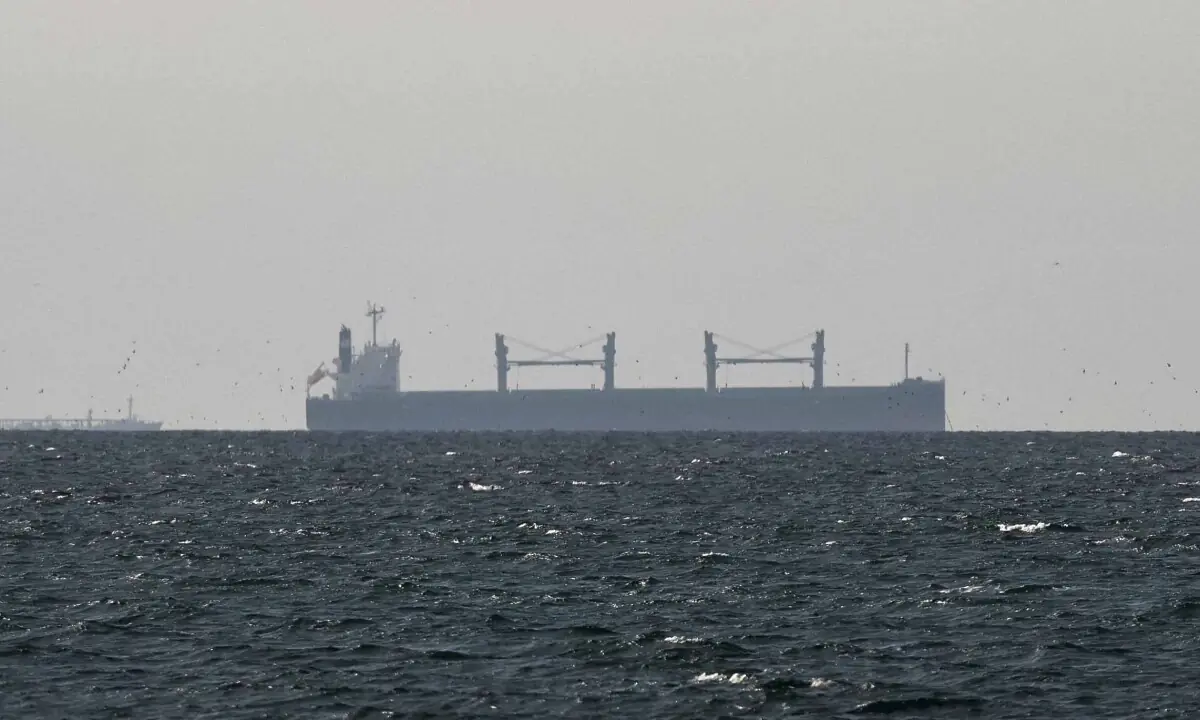
Header image: A tanker sails in the Gulf, near the Strait of Hormuz, as seen from northern Ras al-Khaimah amid the US-Israeli conflict with Iran, in the United Arab Emirates, March 11. — AFP
