

Learning how to get tomato sauce out of clothes is one of those skills you pick up the hard way. Usually mid-dinner, and usually on something white.
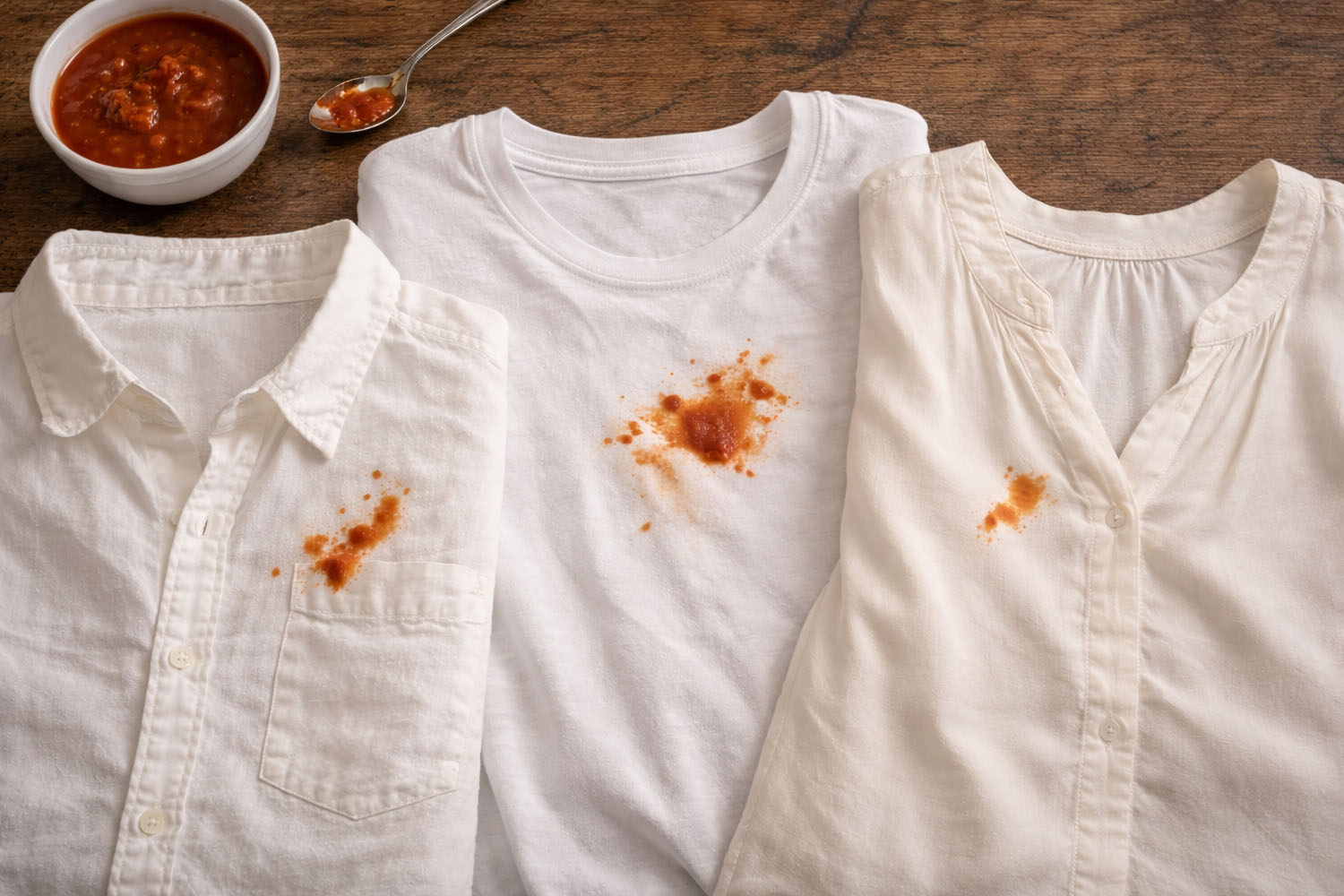
One second I was serving spaghetti. The next, half a bowl of marinara was sliding down the front of my white linen shirt in slow motion. The shirt I’d owned for three years without a single stain.
I did what anyone would do: grabbed a napkin and made it worse.
Here’s what nobody tells you about tomato sauce stains: they’re not like other stains.
You can’t just throw them in the wash and hope for the best. Tomato sauce laughs at your washing machine. It comes out looking almost exactly the same as when it went in, sometimes darker, always more set. I know this from painful, repeated, completely avoidable experience.
So I did what I did after ruining a shirt with red wine: I got systematic about it.
I stained fresh shirts and dried shirts, tested every method I could find, ranked them honestly, and documented what actually worked.
No guesswork. No methods that sound good but don’t hold up.
Here’s the full breakdown.
Quick Answer: How to Get Tomato Sauce Out of Clothes: Scrape off the excess. Don’t rub. Flush with cold water through the back of the fabric. Apply dish soap directly to the stain and work it in gently. Soak in cold water with white vinegar for 20 to 30 minutes. For white fabrics, use a hydrogen peroxide and dish soap mixture for best results. Launder in cold water. Never put it in the dryer until the stain is completely gone.
Why Tomato Sauce Stains Are So Stubborn
Tomato sauce isn’t one stain. It’s three stains layered on top of each other, and each component needs a different approach to break down.
Lycopene (the red pigment): This is what gives tomatoes their deep red color. Lycopene is fat-soluble, which means water alone won’t touch it. It bonds to fabric fibers and doesn’t let go without a surfactant like dish soap or detergent to break that bond.
Oil: Most tomato sauces, including marinara, pasta sauce, and pizza sauce, are cooked in olive oil. That oil embeds itself in fabric fibers right alongside the red pigment, creating a greasy stain beneath the visible one.
Acidity: Tomatoes are naturally acidic. That acidity can actually accelerate the staining process, essentially curing the pigment into natural fibers like cotton and linen over time.
According to the American Cleaning Institute, the key to removing tomato sauce is acting fast and always flushing the stain from the back of the fabric, never the front. Understanding the triple-threat chemistry is what makes that advice actually make sense.
The Golden Rule: Scrape First, Always
This is where most people go wrong immediately.
When tomato sauce lands on your shirt, the instinct is to wipe. Don’t. Wiping spreads the sauce sideways and pushes it deeper into the fabric, turning a small stain into a big one.
Instead, scrape. Use a spoon, a dull knife, or the edge of a credit card. Anything that lifts the sauce off the surface without pressing it in further. Work from the outside of the stain inward.
Then run cold water through the back of the stain, not the front. Pushing water through from behind forces the sauce back out the way it came. This one step makes everything else work better.
Time test: I stained five identical white cotton shirts and treated them at 5 minutes, 15 minutes, 1 hour, 4 hours, and 24 hours. The 5-minute shirt came out completely clean. The 24-hour shirt still had a faint orange ring after two full treatments. Act fast.
5 Methods I Tested (Ranked Worst to Best)
⚠ Important: Do Not Mix OxiClean and Vinegar: If you’re using OxiClean, don’t use white vinegar in the same treatment session. OxiClean breaks down into hydrogen peroxide when it contacts water. Combining hydrogen peroxide with vinegar creates peracetic acid, which can irritate skin and eyes and may damage fabric fibers over time. Use one or the other per session, not both. If you want to try vinegar after an OxiClean soak, rinse the garment completely first, then launder, and treat with vinegar only if the stain persists in a separate session.
Pro Tip for Tough Stains: For particularly stubborn stains on white fabrics, oxygen bleach powder is a strong option, much gentler than chlorine bleach while still effective at lifting deep stains. And if you have an enzyme-based stain remover on hand, use it after the initial treatment and give it time to work before washing. Enzyme cleaners are specifically designed to break down the organic compounds in food stains.
How to Get Dried Tomato Sauce Out of Clothes
Dried stains are harder but not hopeless. The key difference is that you need to rehydrate the stain before treating it. Applying solutions to completely dry, crusted sauce is like trying to dissolve concrete.
Step 1: Scrape off any dried crust with a spoon or butter knife. Don’t skip this.
Step 2: Soak the stained area in cold water for 10 to 15 minutes to rehydrate.
Step 3: Apply your chosen treatment (hydrogen peroxide mix for white, OxiClean or vinegar for colors).
Step 4: Extend your soak time to 45 to 60 minutes instead of the usual 20 to 30.
Step 5: Be prepared to repeat two to three times for stubborn, set-in stains.
For stains that have been sitting a day or more, I had the best results doing a first pass with dish soap and cold water to loosen things up, letting it air dry, then going back in with the hydrogen peroxide treatment for white fabrics or an OxiClean soak for colors.
What If It Already Went Through the Dryer?
This is the question almost nobody answers well, and the most frustrating situation to be in. You washed the shirt, the stain was not fully gone, you threw it in the dryer anyway, and now the heat has essentially baked the pigment into the fabric.
The honest truth: heat-set stains are much harder to remove, with no guarantee. But here’s what has worked for me:
Step 1: Apply liquid dish soap to the stain and work it in firmly (you can be more aggressive with a dried, heat-set stain). Let it sit 15 minutes.
Step 2: Mix OxiClean with warm water and soak the entire garment for 6 to 8 hours or overnight. This gives the oxygen ions maximum time to break down the set stain.
Step 3: After the soak, apply the hydrogen peroxide and dish soap mixture directly. This second round of oxidation often breaks through what the OxiClean loosened.
Step 4: Never back in the dryer until the stain is definitively gone. For heat-set stains, expect two to four treatment rounds.
I’ve successfully removed heat-set tomato stains this way about 70% of the time. The remaining cases, typically old stains on silk or linen where the fibers had really absorbed the pigment, may need a professional cleaner with commercial-grade oxidizers.
Tomato Sauce on White Clothes: One Extra Step
White clothes are both the easiest and the most nerve-wracking scenario. Easiest because you can use hydrogen peroxide without worrying about bleaching. Hardest because any remaining orange tinge is brutally visible.
For white fabrics, I add one step after washing: sunlight.
If there’s still a faint ghost stain after laundering, hang the garment in direct sunlight while still damp. UV light acts as a natural bleaching agent and is remarkably effective at eliminating residual tomato pigment. Leave it two to four hours in strong sun.
This trick has saved two shirts I thought were genuinely ruined. It only works while the fabric is still damp. The stain needs to be wet for UV activation to do its thing.
How to Remove Tomato Stains by Fabric Type
The method matters, but so does what you’re working with. Here’s what I found works best per fabric:
Cotton and cotton blends: The most forgiving. Handles hydrogen peroxide, OxiClean, and vinegar soaks equally well. Multiple wash cycles won’t cause damage, so you can treat aggressively.
See also

Jeans and denim: Denim’s tight weave actually helps here — the sauce tends to sit on the surface rather than penetrating deeply. Dish soap and cold water first, then a vinegar soak. Avoid hot water, which can fade denim unevenly.
Linen: Tricky because its open weave allows stains to penetrate quickly and set fast. Act immediately, be patient, expect to repeat. Extended OxiClean soaks (four to six hours) work best for colored linen; hydrogen peroxide mix for white linen.
Polyester and synthetics: Synthetic fibers don’t absorb liquid as readily as natural ones, so the sauce tends to sit on the surface longer. Dish soap alone often handles fresh stains on polyester. Add a vinegar soak for anything stubborn.
Silk: Avoid hydrogen peroxide entirely, as it can permanently damage silk fibers. Skip vigorous scrubbing too. Blot as much as possible, then take it to a dry cleaner. If treating at home: cold water with a small amount of gentle detergent (like Woolite), soak no more than 5 minutes, rinse very gently.
Wool and cashmere: Hand wash only in cold water with a specialty wool detergent. No agitation that could cause felting. For anything valuable, professional cleaning is the safest call. Never put wool in the dryer.
Pasta Sauce, Pizza Sauce, Marinara, Ketchup: Does the Type Matter?
The stain is fundamentally the same, but oil content varies, and that changes how aggressive you need to be with the degreasing step.
- Marinara and pasta sauces: Most oil-heavy. Start with dish soap before any other treatment to tackle the grease layer first.
- Pizza sauce: Often thicker and more concentrated, which means it can penetrate deeply if not scraped quickly. Treat the same as marinara.
- Ketchup: Lower in oil but high in sugar, which makes the stain sticky and potentially darker if heated. The vinegar soak works particularly well for ketchup. Act fast because the sugar content means it sets quickly.
- Canned crushed tomato (no oil): Actually the easiest, since you’re only dealing with lycopene and not an oil layer. The vinegar soak alone often handles this completely.
What Definitely Doesn’t Work
Warning: Never Do These Things: According to Consumer Reports and the American Cleaning Institute, these common “solutions” make tomato stains worse or permanent:
- Hot water: Heat sets the stain into the fabric permanently. Always use cold water.
- Rubbing the stain: Spreads it sideways and pushes it deeper into the weave. Blot and scrape only.
- Dryer before the stain is gone: Dryer heat permanently locks in any residual pigment. Inspect carefully in good light before drying.
- Chlorine bleach on colors: Will remove the stain and your garment’s color along with it. Use oxygen bleach (OxiClean) instead.
- Toothpaste: Gets recommended online frequently. Works no better than dish soap and is harder to rinse out completely.
My Step-by-Step Emergency Protocol
Based on everything I tested, here’s exactly what I do now. I keep a version of this on a notecard inside my laundry room cabinet.
Step 1: Scrape off excess sauce with a spoon or card edge. Don’t rub. If you’re away from home, blot carefully with a napkin without spreading.
Step 2: Run cold water through the back of the stain. This is the single most important physical action you can take.
Step 3: Apply blue Dawn directly to the stain, work in gently with fingertips for one to two minutes. This tackles the oil component. Rinse.
Step 4: White fabric gets the hydrogen peroxide and dish soap mixture, left to sit 20 to 30 minutes. Colored fabric gets a vinegar soak or enzyme spray, also left to sit 20 to 30 minutes.
Step 5: Wash in cold water with your regular detergent.
Step 6: Check the stain in good light with the fabric stretched flat. Any trace remaining? Repeat Steps 4 and 5 before it goes anywhere near the dryer.
The Stain-Fighting Kit Worth Putting Together
After my red wine stain testing, I put together a small container in my laundry room with everything I need. The tomato sauce experience confirmed the same kit handles both, along with pretty much every other food stain.
- Hydrogen peroxide (3%, standard drugstore bottle)
- Blue Dawn dish soap (small bottle)
- White vinegar (in a spray bottle for easy application)
- OxiClean Versatile Stain Remover (small container, for colored fabric soaks)
- Clean white cloths or old t-shirt scraps for blotting
- A dull-edged spatula or old credit card for scraping
Total cost: under $15. The shirts it saves make it worth every penny. And if you’re interested in keeping your whole home clean with natural, non-toxic solutions, this kit is a perfect starting point.
Frequently Asked Questions
Does tomato sauce stain permanently?
Not if you treat it quickly. Fresh tomato sauce stains are very removable. If you let the stain dry and set, especially through a hot dryer, the lycopene can bond permanently to fabric fibers. Even many older stains can be significantly reduced or eliminated with persistent treatment.
Can I get tomato sauce out after washing?
Yes, as long as it hasn’t been through the dryer. If you washed it but the stain is still there, treat it again before rewashing. Once it’s been through the dryer, you’re dealing with a heat-set stain (see above), which requires more aggressive treatment but is often still removable.
Why does tomato sauce leave an orange mark after washing?
That orange ring is residual lycopene, the fat-soluble pigment in tomatoes. Regular washing alone won’t remove it. You need hydrogen peroxide for white fabrics, an enzyme stain remover, or OxiClean to target that specific pigment. The vinegar soak also helps break it down.
Does hot water help remove tomato stains?
No. Hot water is one of the worst things you can use. Heat sets stains by causing pigments to bond more tightly to fabric fibers. Always use cold water, from treatment through laundering.
Is the treatment the same for spaghetti sauce and pizza sauce?
Essentially yes. All tomato-based sauces contain lycopene and oil, so the approach is the same. Sauces with higher oil content, which includes most pasta sauces, benefit from an extra dish soap pre-treatment to address the grease layer first. Pizza sauce is thicker, so scraping before treatment is especially important.
Final Thoughts
Tomato sauce stains feel catastrophic in the moment. But with the right approach, scraping first, cold water always, dish soap for the oil, hydrogen peroxide or OxiClean for the pigment, almost every fresh stain is fully recoverable.
The two biggest lessons from testing: time matters more than anything else, and the dryer is your enemy until the stain is completely gone. White fabrics are actually easier to treat than colored ones once you’re willing to use hydrogen peroxide.
Keep that stain kit stocked. It takes five minutes to put together and will save you a shirt or two every year.
Have a method that worked, or a stain that stumped everything? Drop it in the comments. I’m always looking to update this guide.
Better Living uses affiliate links. If you make a purchase through them, we may receive a small commission (for which we are deeply grateful) at no cost to you.
